
POPULAR MECHANICS – For years, the strange phenomenon of precognition – an unwavering ‘gut feeling’ that something will happen in the future – has puzzled scientists. The concept may sound far-fetched, but many studies suggest there’s statistical evidence to back up [its] existence.
* * *
I’ve got a hunch this is going to be a fruitful topic.
To start with, we’ve all got guts, and I’m told that, based solely on the size of mine, I should be fairly adept at predicting the future. But in all fairness, there are literally a ton of people out there who are way more clairvoyant than I am. I ran into a woman at the Stop & Shop,™ for instance, whose precognitive talent was obviously off the chart. As she passed me, I was overwhelmed by an alarming premonition: namely, that the box of donuts in her cart wasn’t going to last very long.
While it’s obvious that the National Weather Service has an employment policy that precludes the hiring of anyone with the capacity to accurately predict anything at all, the CIA has been in the market for prognosticators since forever, urged on by the research of a University of Nevada parapsychologist who postulated that consciousness might not operate according to the clock. If that were so, then maybe a reaction to a stimulus really could be sensed before the stimulus occurred. Kind of like a reverse cause and effect.
My powers of parapsychological intuition tell me you’re having some trouble swallowing that, but it’s true, and I’m including a link to grease your esophagus. I used the theory just recently, in fact, when I explained to a shopkeeper that the shattered ceramic bluebirds lying on her floor were just part of a premonition she was experiencing, and that she’d have to wait a few minutes to find out if I actually was the accidental cause of their destruction. Needless to say, I took advantage of the time to make my escape.
The university professor tested his hypothesis by sticking a handful of EEG electrodes onto an assemblage of volunteer noggins and then showing the humans who owned them a few pictures – some nice and some nasty. The pictures. Not the noggins.
But before the images actually showed up, each of the test subjects received a little ‘prompt’ to let them know something was on the way. They had no idea what it would be. Guess what? When the subjects were shown a positive image, in the five seconds between the prompt and the arrival of the picture, their brain activity essentially registered a big “so what.” But in the five seconds before something nasty appeared, their brain activity spiked – all before they even saw the image. It was like they knew something gross was coming.
OK, so none of that necessarily evokes the soundtrack from “House on Haunted Hill,” but it’s interesting, right? Plus, statisticians got out their pencils and confirmed the effect was statistically reliable. Hey. That’s enough for me.
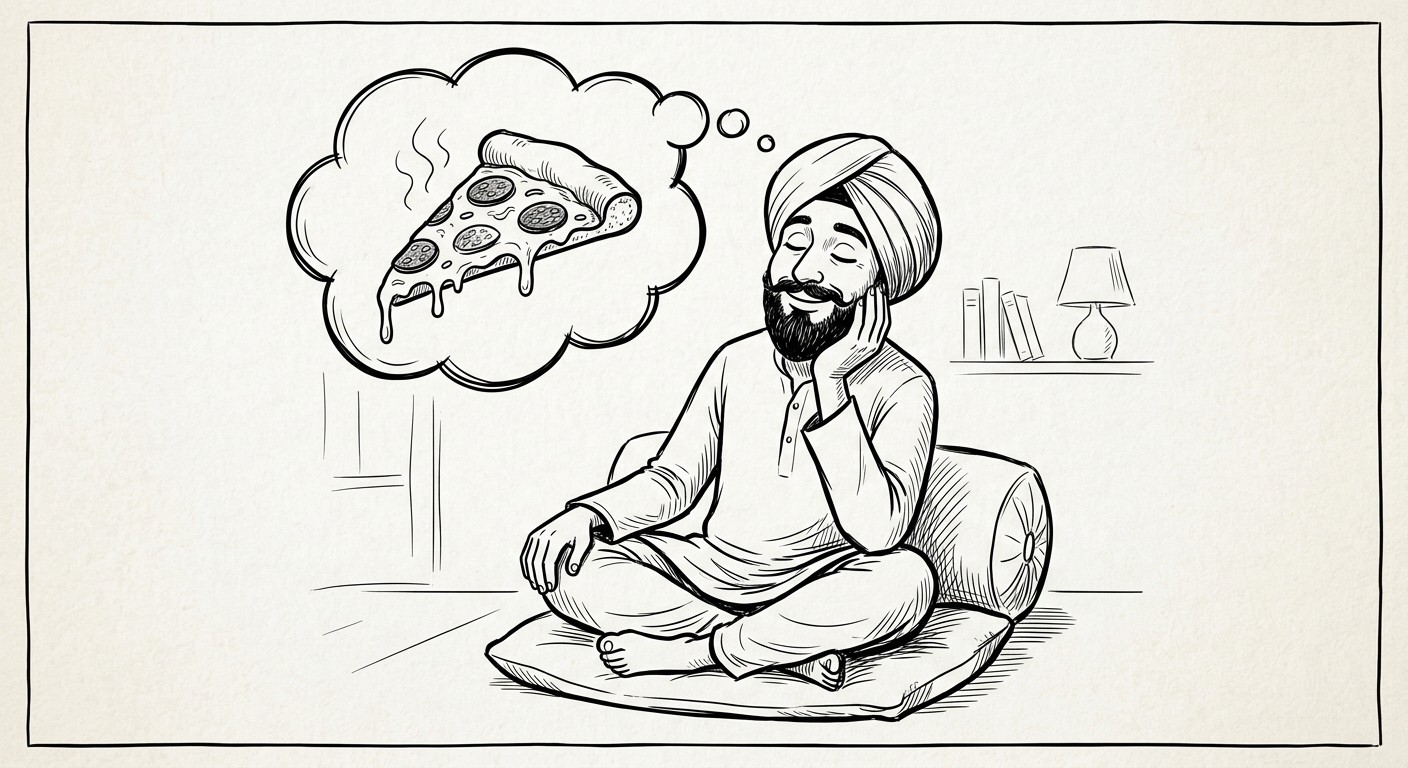
Which is why I’m using my own precognitive artistry – and my prodigious gut – to predict that my wife is planning to serve egg and tuna casserole for dinner tonight. That … and her recipe book was open to a picture of it as I happened to walk by. It took less than five seconds for me to order a pie from the friendly guy at my local pizzeria.
He said he was expecting my call.
 ... While it All Falls Apart
Leave a comment